Author of the Time Rep Series and Note To Self

Latest

It’s finally here!

After 5 years in the making, I’m delighted to say that the cultural phenomenon you’ve all been waiting is finally here! That’s right – Grand Theft Auto V has been released!

In other news, my latest novel Note to Self has also been released today. I’m not sure it will come close to selling the 25 million copies that GTA V is predicted to sell, however if you want to try and help it reach this sales milestone, you can purchase it from any of these reputable outlets below:

Amazon: http://www.amazon.com/Note-to-Self-ebook/dp/B00F8FE4ZY/ref=sr_1_1?ie=UTF8&qid=1379422591&sr=8-1&keywords=note+to+self+peter+ward

iBookstore: https://itunes.apple.com/us/book/note-to-self/id695797866?ls=1

B&N: http://www.barnesandnoble.com/w/note-to-self-peter-ward/1116912614?ean=2940148388562&itm=1&usri=2940148388562

Kobo: http://store.kobobooks.com/en-US/ebook/note-to-self-7

Sony: https://ebookstore.sony.com/ebook/peter-ward/note-to-self/_/R-400000000000001113684

Ganxy: https://ganxy.com/i/83030

Thanks, and I do hope you enjoy it.

The first reviews of Note to Self are coming in…

…and everyone hates it.

Not really! In fact it seems to be going down quite well. Here are a few links to some of the reviews it’s had so far, just in case you’re interested:

http://chrissireads.wordpress.com/2013/09/11/note-to-self/

http://booklahoma.wordpress.com/2013/09/12/review-note-to-self-peter-ward/

http://fancifulfictions.wordpress.com/2013/09/12/note-to-self-by-peter-ward/

http://cayocosta72.wordpress.com/2013/09/06/note-to-self-by-peter-ward-published-by-diversion/

Thanks to all the reviewers above for making the time to read Note to Self and for saying such nice things about it. Having spent the best part of five years working on the book, it’s great to see you’ve all enjoyed it so much. And in the spirit of being fair and balanced (like Fox News), as soon as a negative review comes up I’ll post a link to that too. Maybe.

Note to Self is released next Tuesday!

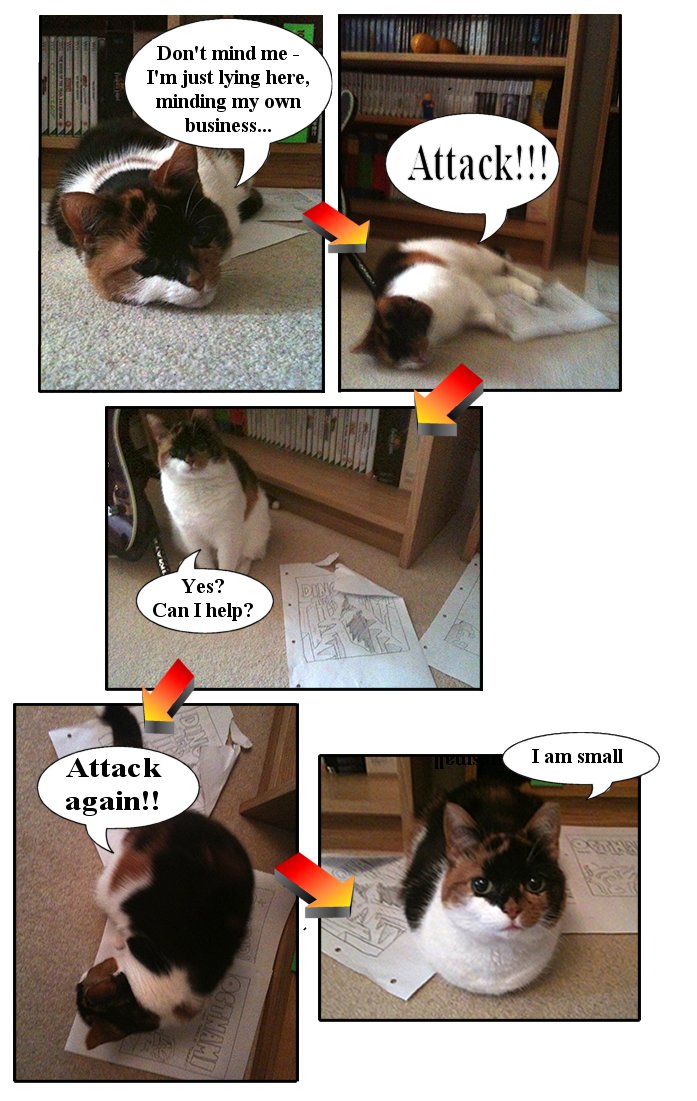
My cat, the art critic

It turns out my cat Matilda wasn’t a big fan of the movie posters I drew for my last post. In fact she hated them so much, she tore up the draft sketches I’d left on the floor, then sat on them. Here’s a little storyboard to show you what happened:

Matilda and drawings


Blogpocolypse

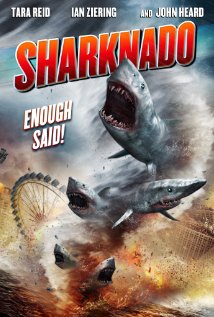
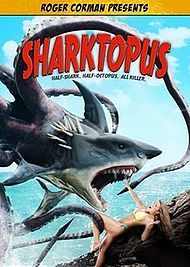
I’ve noticed an amusing trend recently with some made-for-television movies, particularly the ones made for the sci-fi channel. Unsatisfied with having a generic monster terrorising people, film producers are now crossing two animals together to make a different, more terrifying combination. It’s hilarious. Two films that have recently caught my attention are Piranhaconda (a cross between a piranha and an anaconda), and Shartopus (which is a cross between a shark and – can you guess? – a whale. I mean an octopus.) Then, just when I thought things couldn’t get any more ridiculous, I saw a trailer for a film called Sharknado. That’s right – Sharknado. A cross between a shark and a tornado. You don’t even need to look up a plot summary in Wikipedia for that one – the title tells you everything you need to know. A tornado whips up some sharks from the ocean and transports them inland to terrorise people with disastrous consequences. Still don’t believe me? Well here’s the posters for all three films:

190px-SHARKTOPUS_DVDp

Sharknado_poster


Anyway, Sharknado got me thinking about what other combinations of creatures / natural disasters you could have. Here are my top five, along with a tagline, plot summary, and a hastily drawn movie poster by yours truly, which can be made bigger if you click on it :

AntalancheANTALANCHE

Tagline: When the snow melts, get ready for global swarming!

Plot summary: In the not too distant future, a climate change researcher tries to warn people of the dangers of global warming. He discovers that under the ice in a remote mountain range, there lies a species of giant killer ants, frozen for millions of years. One day, with temperatures hotter than ever, the ice in the mountains melts, and the ants defrost, swarming over the planet with disastrous consequences.


SnakeroidSNAKEROID

Tagline: A venom-y attack from outer space!

Plot summary: In the not too distant future, an astronomer identifies an asteroid made entirely of snakes, set on a collision course with Earth. He tries to warn everyone with no success, and when the asteroid eventually strikes, giant killer alien snakes are sent to every corner of the planet with disastrous consequences.


OctnamiOCTNAMI

Tagline: Eight times worse than a tsunami, four times worse than a twonami

Plot summary: In the not too distant future, a marine biologist is researching some bizarre underwater seismic readings near a popular beach resort. He discovers that a tsunami is immanent, but what’s worse, the tsunami will carry a species of deadly giant octopi to shore! He tries to warn everybody but is ignored, and when the giant waves crash onto land, the octopi are swept ashore with disastrous consequences.


CrocularityCROCULARITY

Tagline: Close that portal, and make it snappy!

Plot summary: In the not too distant future, a quantum physicist is trying to create a singularity that will open a portal to another world. When he eventually succeeds however, he inadvertently creates a gateway between our world, and a planet infested with Crocodiles. With disastrous consequences.


DInoquakeDINOQUAKE

Tagline: Dino-sawing up from the centre of the Earth!

Plot summary: In the not too distant future, dinosaurs come out of an earthquake. With disastrous consequences.


So there you go. Those are my top five films ideas that combine a creature with a natural disaster. Other honourable mentions for ones I couldn’t be bothered to draw include Scorpcano (scorpions coming out of a volcano), Stingrayn (Stingrays falling like rain from the sky), Zombears (zombie bears) and Taranogater (a cross between a tarantula and an alligator).

If you can think of a good title for a film using the formula of combining two things together, send it my way and I might have a go at drawing it…

Until next time!

Elysium review

Warning – This review contains major spoilers! If you haven’t seen Elysium and don’t want to know what happens, DO NOT READ ON!

Having enjoyed District 9 back when it was released in 2009, I was really looking forward to director Neill Blomkamp’s new film Elysium. Set in the distant future, the film depicts a nightmare vision of Earth; a planet paying the price for years of humanity’s excessive consumption with pollution and disease rife, extreme social unrest, and a crippling lack of natural resources. The super-rich however, wishing to preserve their way of life, live on Elysium, an enormous 2001-esque space-station orbiting the planet with an artificial expanse of rolling green fields, spacious mansions and opulent surroundings. In comparison to Earth, Elysium is a utopia. The food is plentiful, the air is clean, and nobody ever gets sick, thanks to everyone having a “med-bay” in their house – a device that can immediately scan and heal any disease in seconds at the touch of a button.

If you haven’t seen the film and are just reading this for kicks, let me give you a quick plot summary, although be aware that this will totally spoil the film if you haven’t seen it. Basically, a factory worker on Earth (Max, played by Matt Damon) has an industrial accident, exposing him to a lethal dose of radiation and leaving him with five days to live. Not wanting to die, he agrees to steal data from an Elysium citizen in return for a ticket to the space station, where a med-bay can cure his radiation poisoning. However, the data proves to be the key to rewriting Elysium’s programming and bringing equality to society, and once Max has it in his possession, he travels to Elysium, uploads the program, and brings equality to the world. All the while, the Secretary of Defence on Elysium, Jessica Delacourt (played by Jodie Foster), is trying to stop him, but she doesn’t. She gets stabbed in the neck. There are some secondary characters that do stuff, but this review is already going to be way too long (make your posts no more than a page in length, I’m told), so I won’t go into Sharlto Copley’s performance, or the fact that a little girl has her leukaemia cured.

So what did I think? Well to be honest, I left the cinema feeling very disappointed. When I first saw the trailer, I thought Elysium’s concept was strong, the special effects looked great, and the pedigree of everyone involved made me hopeful of a sci-fi blockbuster with depth. In reality though, I felt the film was a let-down for one simple reason – the plot was driven by a series of contrivances, and completely missed the opportunity to explore its concept in a satisfying way.

For a start, I felt Max’s accident was a clumsy trigger used to send him on his quest, and the path he took to get him to Elysium was littered with far too many plot conveniences. When Max is asked to perform the robbery for instance, he chooses the boss of his old company as the mark, who just so happens to be in possession of a code that can be used to reset Elysium’s systems. Despite the code supposedly being encrypted at first, Max is suddenly able to read it when the plot requires it. Doors unlock at precisely the same time as fights finish. Ships are easily shot down by Elysium defences when they are not critical to the plot, but when there are characters on board that need to land, the ships are able to do so. Now, I know it’s easy to highlight plot holes to pick apart a film, but they were just so frequent in Elysium I constantly felt myself being pulled out of the story and thinking about the mechanisms forced into the plot to keep the narrative flowing. It felt written.

However, my biggest problem with Elysium wasn’t so much to do with what was put in the film, but rather what was left out. Elysium had a great concept, and I just felt that if a little more thought had been put into the back-story of the space station and how it perpetuated its existence, a much better story could have emerged. For instance, if there are food shortages on Earth but plenty to go around on Elysium, where does it come from? Is it grown there, or is it grown on Earth? I thought it would have been really interesting if, as well as there being this space station orbiting the planet, there was also perhaps a continent on Earth, cleared of people, which was used purely as a giant farm to provide all the food for the super-rich living in space. It could have looked visually stunning – a huge expanse of greenhouses, lakes of different fish, fields of different animals, all sorts of orchards etc, with factories processing the food into packaged goods for the space station. The filmmakers could even have had a powerful scene where workers were being checked to make sure they were not smuggling wheat out to feed their own families. The continent could have had giant walls all around it to keep the rest of Earth’s population out, and the contrast between the opulence within and the poverty just outside could have been really striking. It also could have been a much better way for Max to get up to Elysium – if he worked in one of these food processing plants and worked out a way to interrupt the food supply, wouldn’t this have been a better way to get there? I don’t know. Well I do actually – it would have been better.

I also think we should have seen an ex-citizen being thrown out of Elysium. If it’s supposed to be a reserve for the super-rich, what happens if someone goes bankrupt? We should have seen a family go through this ordeal, with Jodie Foster’s character one minute being kind and fawning to them, and the next minute tossing them back to Earth to fend for themselves. This could have drawn some interesting parallels with the ebb and flow of wealth today. With a new vacancy on Elysium, we should then have seen the old family possessions and photographs being stripped away, and replaced by those of the next family in line to live there.

Then there’s the ending, where Max uploads the code and re-writes Elyisum’s programming to make everyone a citizen of Elysium and therefore entitled to the benefits previously afforded only to the super-rich. When he does this, med-bays are sent flying down to Earth to administer help to those that need it, regardless of their social status. It’s a happy ending, but I just feel it could have been much more powerful if the consequences of Max’s actions were explored in more detail. After all, if Earth’s two main problems are over-population and a lack of natural resources, how does curing all diseases help matters? And what powers these med-bays anyway? What resources are required for them to remain operational? I think it would have been much more interesting and morally ambiguous if Max was confronted by the Jodie Foster character before uploading the code, where she would try to convince him that handing the keys of Elysium over to the masses was not the answer – Eventually, the med bays would cease to function, the population on both Earth and Elysium would expand uncontrollably, and humanity would destroy itself. You could then have ended the film not knowing if he was going to agree with Foster or not.

Ultimately, Elysium is a film worth seeing as it has an important message and there are a lot of strengths to it. But it could have been so much more powerful. I suppose one good thing about it is that it’s not too long, unlike this review…
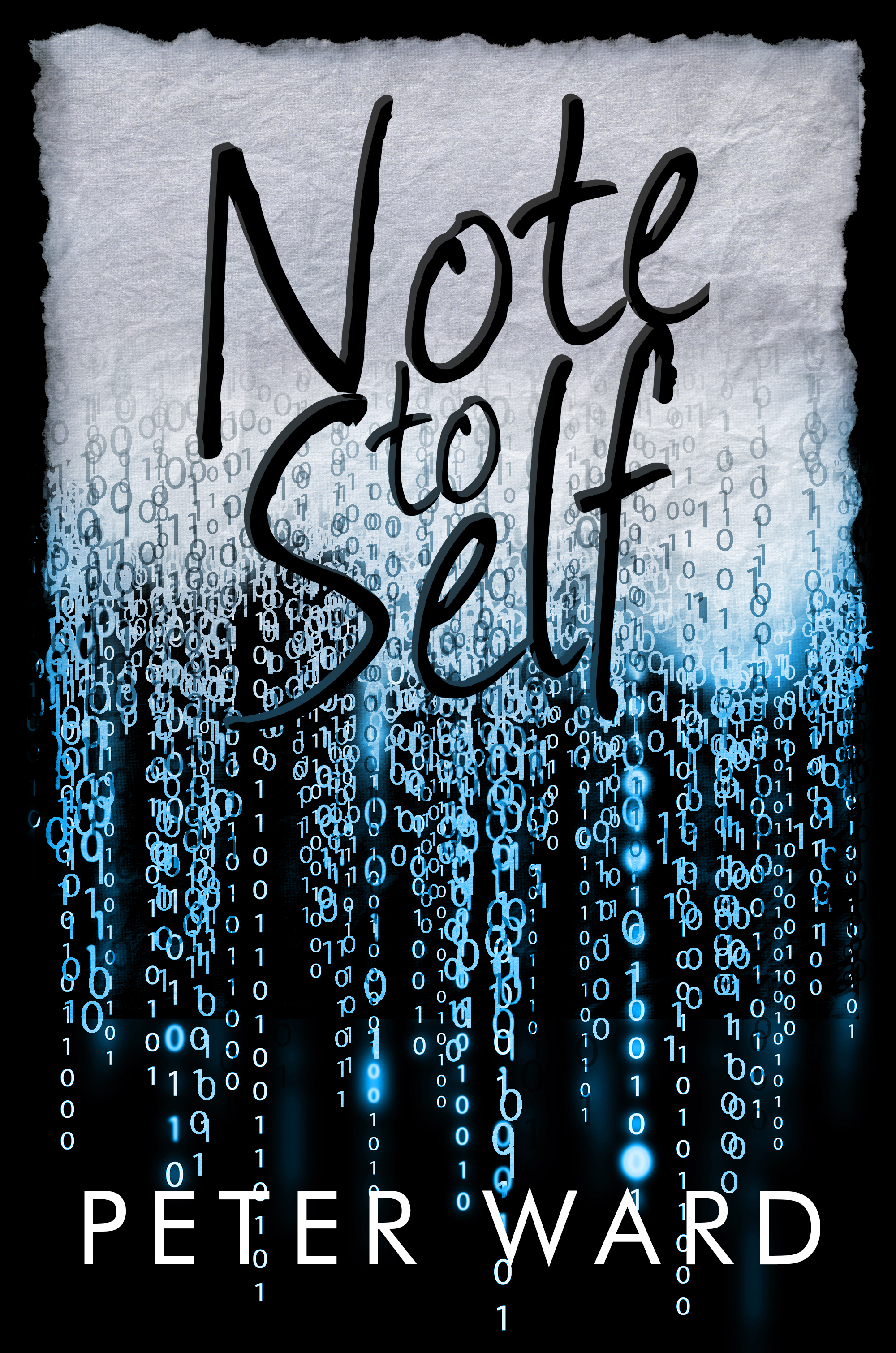
The cover for Note to Self is unveiled!

Ladies and gentlemen, I present to you the cover for Note to Self:

Note to Self


Note to Self will be released on September 17th.

New blurb for Note to Self

How much do you trust notes written in your own handwriting?

What if you don’t remember writing them?

What if they’re telling you to jump from a hotel window because the person on the other side of that door wants to kill you?

And what if the notes are telling the truth?

Richard Henley is an ordinary man leading an ordinary life, but when he begins to find strange warnings in his own handwriting, he is sent on a journey to places he never knew existed. With an all-powerful organisation on his trail, his only hope is to trust unexpected allies, take control of his life and uncover the truth about what happened to the girl he loved twenty years ago.

Note to Self is released on September 17th.

A brief history of Time Rep

As you may or may not know, Time Rep took me quite a while to write – six years in fact. But those of you who have read it will know that it’s hardly War and Peace in terms of length (or indeed quality) – in fact it’s only 267 pages long. That means that on average, each page took me a whopping 8.2 days to write. So what the hell took me so long? Did I set myself some sort of challenge whereby I only allowed myself to type by pressing my nose to each key on the keyboard one at a time? Did I carve the words into slabs of stone before handing them to a typist? Or did I fall asleep at the keyboard in the middle of writing every now and then (which often happens to me in the middle ddddddddddddddf dffffffffffffffffffffffffffffffffffff of writing some sentences)?

No, the reason Time Rep took me ages was down to two key factors: First of all, I was writing it around a full time job, and secondly, I had no idea where the story was going when I started, which certainly slowed things down somewhat as I tried to work out what should happen next. And it’s this second reason that I’m going to explore today – the different stages of development that Time Rep went through over the five years it took me to write, and how it got to be the book garnering mixed-to-positive reviews that you see today (if you exclude the one-star review someone gave it on amazon which I still cry about to this day). Be warned though – if you haven’t read the book yet, the rest of this post contains major spoilers, or “spoilerzzzzzzzzzz” as they say on some other nerd websites:

When I first sat down to write Time Rep in 2002, the only thing I had in my mind was the title, and the concept of having a holiday rep meeting tourists from the future. That was it. I hadn’t worked out anything about the alien invasion, the supercomputer predicting Geoff’s insignificance to the space-time continuum, the scene during the Great Fire of London – nothing. All I had was a mental image of a guy asleep on a sofa. I didn’t even know Tim would turn out to be a spy working for the holiday company. In a very early draft, Mr Knight transported Geoff to the future without him realising (as London was still the same in the year 3050), asking him to come back when he’d worked out what he’d done. And although this idea was eventually scrapped, the concept led to the idea that the London of 3050 had been kept the same as it;s 21st Century counterpart due to the alien attack, which in turn led to the idea that the Varsarians were trying to change history.

By 2006 I was about halfway through writing the book – Eric was dead, and Geoff had been knocked unconscious at the party and hypnotised. But from there, I just couldn’t work out what should happen next. Everything I wrote just seemed wrong, and I eventually stopped writing for about a year. I just didn’t know how to proceed. What should happen next? Then one day, a stream of ideas hit me all at once. In particular, I came up with the central idea of the alien invasion, and Tim watching the destruction of humanity through a simulation. I remember the day well – I was actually on a work trip, sitting in my hotel room. I was due to meet up with some colleagues for dinner, and just as I was getting ready to leave, the entire second half of the book hit me at once – the alien invasion, the logic behind defeating the supercomputer, the epic space battle at the end, everything. I remember almost shaking in anticipation as the plot revealed itself to me in my mind, and the next minute, I was frantically writing it all down in scribbles. I rang my colleagues and told them to eat without me, as I couldn’t stop myself from writing. Two hours later, I had twelve pages of notes, a full synopsis for the second half of the book, and severe cramp in my right hand. When I got home, I started writing again, and three years later the book was complete.

By 2008, I had a first draft ready to go. It was quite different (i.e. worse) than the version you see today, but I was reasonably pleased with it, so I started sending the book out to agents. I remember this process taking ages, because each agent wanted the manuscript in a different format – be it the first three chapters, the first five chapters, the first 50 words, a full synopsis, no synopsis, covering letter, chapter breakdown, etc. All in all, I sent the book out to about 40 agents, and over the next few months I received about 40 rejection letters. Some of the letters had some nice feedback, but overall the feeling was that sci-fi was a hard sell, and the book just wasn’t good enough. I was disappointed, but I figured these people probably knew what they were talking about, so I put the book in a drawer and set to work on trying to write a better one. (The second book eventually became Note to Self, although whether or not people will think it’s better than Time Rep remains to be seen!)

Then in September 2010, I was cleaning out my desk and found the copy of Time Rep stuffed between some video game magazines. It got me thinking about how much I had enjoyed writing it, so I found the file on my computer and started reading it again. Having forgotten most of the jokes and the nuances of the plot, I found myself quite entertained reading through it again, so I decided to upload it to free-ebooks.com for free. What the hell, I thought. Within a year it had been downloaded 60,000 times, and was the fifth highest rated book on the website. From this, I got some interest from publisher Altin Bilek Yayinlari to purchase the Turkish language rights, and it was from here that the literary agency Diane Banks Associates offered to represent me to publishers worldwide.

And this was when the hard work really started. You see, although Time Rep had received some really positive reviews, they were from people who hadn’t had to pay for it. If people had to shell out their hard-earned cash for the book, would they be so kind? None of us thought they would – the book was a little short, clocking in at about 70,000 words, and it was felt the overall plot and character development could be greatly improved.

So I set about re-writing it, using feedback not only from my agent, but also a few of my friends. Bad jokes were changed for less bad ones. A significant amount of description was added. Geoff’s character arc was improved so he evolved over the course of the story. Geoff and Tim displayed more comraderie towards each other. The nameless aliens were given a name. The Fire of London scene was lengthened to include a chase. The trip back to prehistoric times during the interview was added. Ruth’s knowledge of events was made more explicit so the twist at the end had more impact. Overall, several improvements were made to the story, and by June 2012 the book had jumped up to about 81,000 words and was ready to go. But it would still take another six months before finding a home at Diversion Books.

Then came the job of Americanizing Time Rep. After all, Diversion Books is an American publisher, selling largely to an American readership. So prams became strollers. ITV became Fox news. Courgettes became Zucchini. Trousers became pants. And so on. By June 2013 I was finally done, and I watched as the book was finally released – a full eleven and a half years after I wrote down the first five words of the manuscript:

Time Rep

by Peter Ward

The top ten mistakes in writing

Okay, it’s been a while since I’ve had a list on this website – the trusty stalwart for any blog entry, since everyone loves a good list, don’t they? But what should the list be? How about the top ten best things to do lists about? No, that’s stupid. Or what about the top one best book about time travel? No, too easy… Maybe I should do the top three worst introductions to a blog – although without putting much thought into it, I think this paragraph would probably take the top spot.  

No, I think I’m going to list my top ten mistakes that authors make when writing. And by that, I don’t mean grammatical stuff like starting a sentence with “and” (which is fine, by the way) – I mean things that annoy me when I’m reading a book. Please bear in mind that this is purely based on my own observations – I’m sure there are far better authorities on the matter, but these are the ones I tend to pick up on, in no particular order:

10) The narrative spells everything out for the reader

There are many examples of this, and it’s usually because the author is worried that the reader doesn’t understand what is going on, or how a character feels in a particular situation. One example might be where a guy breaks down in tears, only for the text to then explain that he was upset. Or where characters stop in the middle of the story to ask each other questions to summarise what is going on in the story. Back to the Future Part 2 is a good example of this – about halfway though, the momentum of the film is put on hold for five minute to allow Doc Brown to explain the situation to Marty (and by extension the audience), even going so far as having him draw a diagram on a whiteboard of the space time continuum to avoid any confusion. Not necessary.

9) Characters look ‘confused’, ‘nervous’, ‘angry’, ‘happy’ etc.

Characters should not look ‘angry’, They should grit their teeth and start shaking, their fist clenched. They should not look ‘happy’ either – they should smile broadly, their eyes twinkling with energy. Many authors fall into the trap of describing how someone looks by describing how they feel, rather than just how they look.

8) Over-writing

Sometimes a writer will go over and over and over and over a section of their book until they feel it is right – I did this with the first chapter of Time Rep, and looking back I think it’s the weakest chapter in the whole story. When you start going over something again and again, the writing loses its freshness, and you begin to tweak it to the point where it is no longer anything creative – the text takes on a strangely functional quality. Don’t get me wrong – looking back over your work and editing it is important, but there comes a point where you just have to leave something alone and move on.

7) The plot does not pass the Bechdel test

What do you mean you’ve never heard of the Bechdel test? 70% of fiction (especially films) fail to pass it, and it tends to be a sign that a story is not representing women in a realistic way. But what is it? Well, in real life, there are roughly them same number of women in the world as men, and when they talk to each other (which women tend to do quite a bit), the topic of conversation isn’t always about a man. However, if fiction was truly representative of real life, the world would be 90% male, and if women ever talked to each other, most of the time they would only talk to each other about men. So there are three stages to the Bechdel test: 1) Does the story have more than two named female characters in it? 2) Do they ever talk to each other? 3) If they do, do they ever talk to each other about something other than a man? Take your favourite book and put it to the test – the chances are, it will fail. And in case you’re interested, Time Rep fails the Bechdel test, and Note to Self passes.

6) Character dialogue isn’t what like how people talk like

There are two parts to this – the first is where characters speak unrealistically (see my post on writing dialogue for more on this), and the second is where they talk in situations where there is no way they would be talking to each other. For instance, if a man and a woman who like the look of each other are sitting next to each other in the middle of a plane crash, they would not be chatting each other up – they would be pooing their pants.

5) Too much description

This one all comes down to an author’s individual style – sometimes pages and pages of description can still be a light, entertaining read. Other times, a short piece of description can seem heavy and really hard work to read. For me, I think the thing that differentiates a book from most other mediums is the fact that so much can be left up to the reader’s imagination. Find the balance that works for you and stick to it.

4) The author displays too much attachment to a particular idea or scene

One of the best pieces of advice I ever heard about writing was that you must be prepared to cut your favourite scene or idea. In Note to Self, there were two ideas I absolutely loved, but both of them never made the final draft because they were simply too difficult to incorporate into the story without having a detrimental affect to the rest of the book. If this is true of an amazing idea you’ve got about your own story, then ditch the idea.

3) Unnecessarily long words

Bad writing is using long words when short ones will do.

2) Lack of emotional engagement with main characters

With many books these days its all plot, plot, plot. And plot is fine, but for the reader to care about the outcome of a plot, they have to care about the affect it will have on the main characters. So make us care about them!

1) Crap ending

 I read the whole thing for this?

Don’t judge someone who designs book covers by their book covers

You know, as much as I go on about how hard it is to write a book, I often spare a thought for the poor person who has to design the cover. After all, the cover has a very important job to do – it has to visually represent the essence of the book in a way interesting enough to attract people’s attention and lure them over. And even worse than that, the weight of expectation when showing it to the author for the first time must be considerable, even though the publisher often has final say. The thing is, it’s often not very easy to find the right image – especially when the stories are as bonkers as the ones I write.

Time Rep went through a variety of covers before the gorgeously sexy one it is bestowed with today. First of all, when it went on the internet as a free e-book, the website threw together a cover quickly for me, based solely on the title. And this is what it looked like:

Time RepI suppose it had the word “time” in the title, so a stopwatch did the trick for them. Anyway, after a few weeks I thought I’d try and improve it, and designed something myself in a generic digital watch font with some lines shooting out of a corner:

Time Rep 2When I showed it to my girlfriend and asked her what she thought, she said “It’s rubbish.” Which it is. But sure enough, that image stayed online for a good few months. Finally, when Diversion Books obtained the English language rights, my agent asked me if I had any suggestions for the cover to pass on to them. I suggested a picture of the seagull sitting on a rock, overlooking the ocean (which to me is the key image of the book), and included this mocked up image as a guide for the designer:

Time Rep 3Having realised the image was awful within five minutes of sending it, I e-mailed my agent again telling them to ignore it. She replied “Thank God you said that – I thought it looked like a self-help book!” So you see, when I look at book covers (and the cover of Time Rep in particular), I take a moment to appreciate just how hard it is to design something that looks good; something that does the story justice.

This is why I need to become more famous you see – to help make life easier for my cover designer. After all, the more famous you get, the more space your name takes up on the cover, and the less space is given to pesky design elements such as the title of the book, or any images associated with it. I’ve demonstrated this below in a chart I like to call the “Fame to name size on cover” curve:

gumbleYou see how easy it becomes? If the cover you’re designing sits on the right hand side of the curve, you’re laughing! Just bosh the name in, leave an inch or so for the title, then you can spend the rest of the day playing The Elder Scrolls: Skyrim. Or perhaps Pikmin 3 if you’re not into role playing games, and have a Wii U.

So why am I talking about book covers, you ask? Because I’m excited to see what the nice people at Diversion Books come up with as the cover for Note to Self. So much crazy stuff happens in that book, I wouldn’t know where to start if I was them…

Until next time!